
An Interesting World
Discovery & Wonder in Our Imaginings

I have been trying to put a little more effort into my posts. Last week, after publishing, I thought that maybe I should start planning a little more. Not a lot, just a little. Maybe a few days before I am going to write my next article I start putting some notes down. From those notes I do a little research, a little reading, a little investigating.
For this week, I have been focusing more on what I am going to write next, and then today came and my mind decided to scramble. I read through one of my older posts that had the potential for an expansion, and I was about to start writing a follow-up, and I realized that I had a perfectly good inspiration from today’s game.
My Semi-Regular Sessions
For at least a year now I have had the pleasure of gaming twice a week. Of course, this isn’t always the case, life comes for all of us, but three out of the four weeks each month I have managed to keep the schedule.
The latest game in which I am the GM is Shadowdark. For my players, of which there are only three when everyone is present, I ran the first game as a Gauntlet and ushered them directly into The Gloaming. The Gauntlet was Trial of the Slime Lord, which was a perfect lead-in to the Cursed Scroll 1 material, as the adventure pertains to oozes and slimes.
So Many Deaths
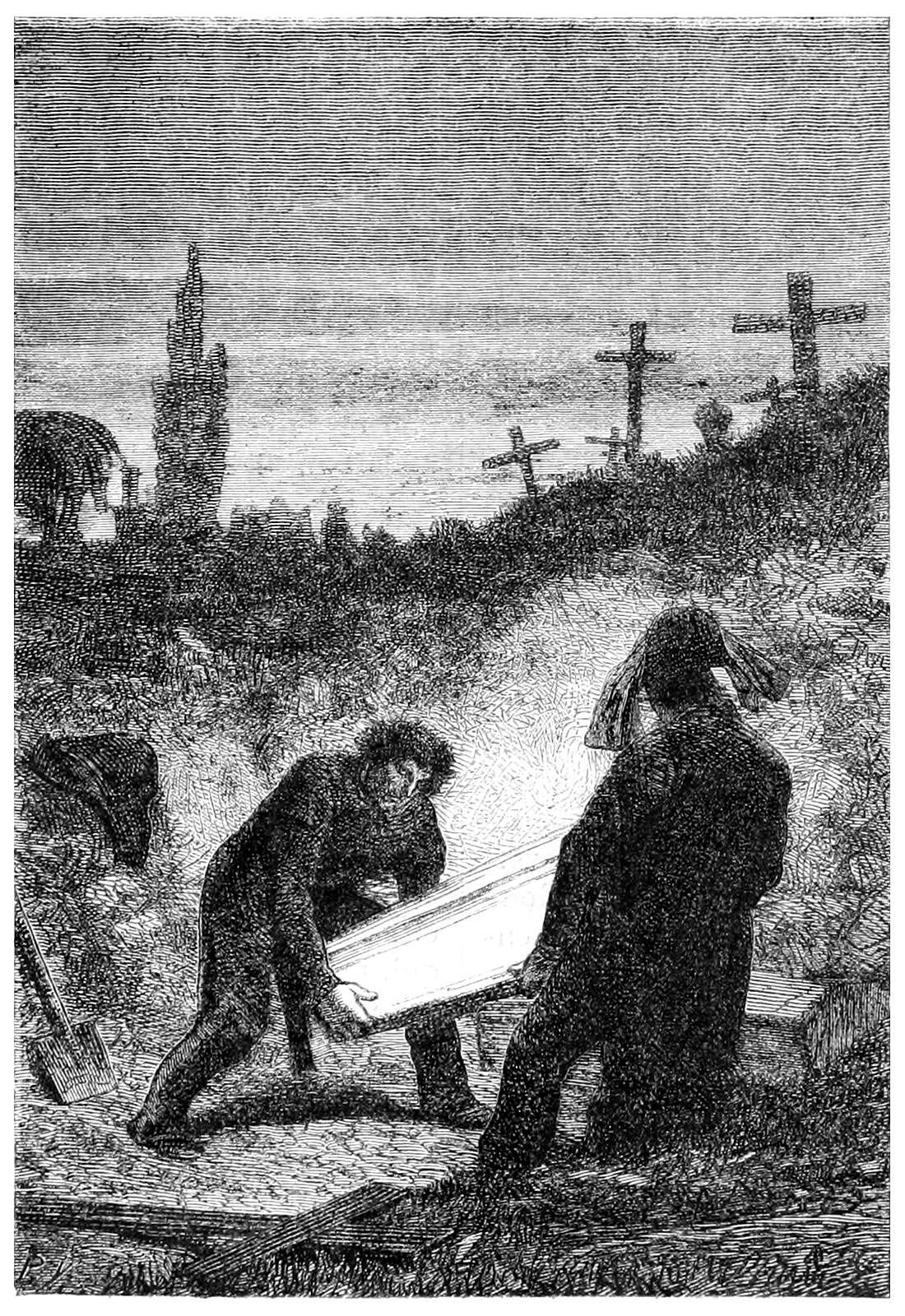
Despite having come into this game directly from Mothership, the lethality is both refreshing, and somewhat disheartening. Losing a few characters is acceptable, so long as the players can learn the curve, adjust, and begin to make progress. To date, we have had three sessions and lost seven characters. Seven. These are not inexperienced players. They are somewhat new, and definitely new to the styles we have been exploring as we cross into and out of different games of late, but they are not carefree and reckless.
In today’s session we lost four characters alone. As they were camping in the wilderness outside a bandit camp, they were set upon by a random encounter. This is not unusual, they have become somewhat accustomed to the random encounters, but this one was big. I followed the randomizing guidelines in the big book, and it turns out that the Willowman, a famed and feared monster that wanders The Gloaming, was right on their camp, and unhappy with their presence.
Given how many PCs had already died, partially because there have only been two players since the beginning of this particular game, they had acquired some hirelings. One of them was immediately murdered in their sleep by the monstrosity, and the other was paralyzed. The one PC that was in camp decided to fight in the hopes that one of the hirelings would get away, which worked.
The hireling made it to the other PC as they were returning from scouting the bandit encampment, but the Willowman was right behind. The hireling was once again paralyzed, and this time quickly slain, while the PC made a run for the bandit camp, hoping to lure the monster inside and have it get caught up with the bandits. Brilliant idea, I thought. It seemed only fair that running through the forest at night would be a difficult endeavor, especially since the PC was trying to stay ahead of the Willowman and its abilities. There was a roll, which was failed, and then a Charisma check, which was failed, and the TPK was complete.
The Discussion
We had 10 minutes left before we normally ended our sessions, so I asked the players, “what do you think of the game right now?” I needed feedback, this game was really brutal. The lethality is a plus, as it puts combat into the unusual context of not being the only solution. When the PCs are heroic legends with long deaths, dying is not going to be a disincentive, merely an inconvenience. They appreciate the survival nature, but the level of brutality and how many characters have been lost so far is making them feel like they aren’t going to get anywhere. And this is the ultimate crux, they are starting to not see a point where they will make progress.
The hexploration (as I call it) is also something they are enjoying. They see the markers on the map, but they don’t really know what they are or what they mean, and several times they have gotten to a location with a mystery. A stone in the middle of a clearing with a carved swirling pattern, four rough insets, and four barrows surrounding. They dug one up looking for treasure only to lose one of their characters to a wight. They didn’t know it was a wight, but they learned something all the same, and then ran for their lives. They are very much enjoying the discovery elements of this game, which I am also, even though as the GM, I know quite a bit about everywhere they could go.
Solutions
We already knew, and I had already mentioned, the option of having regular access to hirelings. Hirelings are ready replacements if a PC dies, they can boost the combat prowess, and they can aid in carrying loot. It would be better if we could find more players, and I have been trying, but they need something to bring them up to the designed standard of the game. This game is designed with parties of 4-5 player characters in mind, meaning that half of that is going to be half as effective.
I recently read a post, I’m sorry I don’t remember which one, where someone discussed the rule in Shadowdark where failing to cast a spell means you lose access to it for the rest of the day. I have known about this rule, but this person said they only resort to that when they critically fail. So if you fail to cast, you basically lose your turn, which is rough, but not nearly so much as losing access to a spell. In my opinion, that would be akin to a fighter losing their sword if they missed. So I have been ignoring it, for now, with a consideration of making the failure window larger. But with only two PCs of late, I have to give them a little more power to help them survive, or they won’t have fun, and then we won’t have a game.
That Bit About Discovery
When I asked them for feedback, I was expecting it to be about the immediate situation, where we lost three PCs in a matter of 10 minutes playing. But that second bit, the one about really enjoying the discovery, caught me off guard. I knew what they were saying, I had recognized it when they came across some of these mysterious locations, but when they said it it really clicked.
One of the thoughts I have been having lately has been about what the PCs know. A player knows what the GM tells them, and not much more. As time goes on and players exist through their characters in a given world, they will come to know more and understand the world better, but especially in a new game or new world, they know very little. This is because the players know very little. When it comes to games like Mothership and Shadowdark, the guidance for the GM is to give the players as much information as possible.
When I first started hearing this, I was confused, but the more I thought about it, the more it made sense. Give the players as much information as possible. There are things a player needs to know, even if the character doesn’t know it, that allows them to understand the context of where their character is or what they are doing. And the more information they have, the better the decisions they will make, which is the point.
When it comes to discovery, something that is amazing or weird or wonderful but not dangerous or threatening, this really comes to light. I described the swirly stone, the four graves, and the four little indents in the stone, but that’s it. That was all the information that I had, save for the things in the graves and what they had that would do something with the swirly stone, but those details were for me.
Out of fear they left this place, fearing the undead and the horrors that may come down upon them for messing with graves. Which makes sense. But when they returned, they decided that they wanted to know what it was all about, so they started digging. It was a little difficult but eventually they popped open a stone casket to reveal the undead horror they so feared, and they were not really surprised, but they were also rewarded with understanding the world. They knew there was going to be undead, but they didn’t know they were right until they dug it up. And being right is rewarding.
The Feeling
Even though they didn’t fully figure out what was there, and thus gain any rewards or treasure yet, they know that something is there. They know that there is a mystery behind that deadly battle, and that when they return, ready, they will unravel it and be rewarded. This is something I have witnessed very little in my time playing these games; the mystery. It can be very difficult for players to feel that sense of mystery and excitement, to get the players to buy into the situation and leave their general knowledge about these games at the door.
The second little area they found with a mystery in it was another clearing with a ring of mossy stones, and given the time (which is relevant for this mystery) they found only a handful of tiny dandelion petals, the ones you blow off, that seemed to be made of silver. One of the characters has a background as a ranger so I made it fairly easy for him to search the area for clues or something to indicate what this circle was for, and I decided this would pique their interest and leave them wanting to learn more later.
I am intentionally being a bit vague about these mysteries in case anyone reading this wants to play through this amazing zine. When I first read through this zine, I saw lots of places where I would need to fill in the details, given the spartan descriptions and the vague connections between characters and the region as a whole. But I didn’t.
Inspiring By Design
By leaving the details in short form and all the explanations vague, this little zine has built a wonderful little world in my mind. It has given me enough to tell my brain what the parameters are before my fantasy addled imagination fills in the rest of the details or starts making connections of its own. Also, all those details normally included with settings and adventures leaves little room for those connections to be made. Because we are told every little thing, understanding them is akin to memorizing a whole book, which we don’t even do when we are in school. We memorize notes and concepts and inspirational ideas the lead our brains to understand the content in a way that works for us.
Spoilers Ahead
One of the first true monstrous characters the party encountered was Drusilla, the medicine woman of the smallest village. They were immediately suspicious and decided to stake out her little hut overnight (it wasn’t supposed to be overnight, they just wanted to catch her doing something and follow her, but she ended up staying). What they did end up seeing was the werewolf she had been working with, who left the hut late at night, and the ranger followed her.
Drusilla is a hag and she is working with the werewolf to poison the townsfolk so that the werewolf can take their children as cubs, as hers were killed by the local dragon. So, when Victoria, the werewolf, left the hut, I had her go by the village to just peer in through the palisade. I figured a creature, evil or not, that was yearning for children after losing hers, would be hard pressed to not constantly be looking into the town, impatiently awaiting the day she can take her new cubs from the dead villagers.
Once she caught on to the ranger it was a tense situation. She moves incredibly fast and rather than fight in the shadows of the village he opted to flee for the gates. I made all my rolls honestly, and he made it to the gate with only a few hit points left, and as soon as she saw the gates open she fled into the night. It was a tense situation brought on by me having only the most spare of details in which to adapt and create a situation where the PCs would encounter the interesting mysteries going on around them.
Because of those sparse details and vague descriptions, I was able to adapt the situation to the players. I didn’t feel hemmed in, in fact I felt empowered, to put Victoria at Drusilla’s hut so that the players would be rewarded for their ideas, and rewarded in a way that furthers the adventures and events going on in the local area.
Spoilers Over
The design gives me the necessary information so that I can cater the experience to my players and allow them to approach situations however they wish. If they do it smart, they may make it through with less struggle. If they don’t, it may lead to the death of everyone in the party. That dynamic only exists because the game is so brutal, which seems to be perfectly paired with the design of the adventure “zone.”
Empowering the Arbiter
As we are making our way through this, my first real hex-crawl, I am beginning to understand what I have been reading and hearing for years. Maybe it is because I didn’t understand what people were saying, maybe it is because I am stubborn and have to learn lessons the hard way, but I am starting to get why the rules light approach is so appealing. I feel empowered. The creature wasn’t on the random encounter list, I decided that it would be there so the players could learn about it.
Another example is the list of rumors. I have used rumors before, but it has been a long time. When I was preparing for this game, I wrote them all down in my notebook and gave them numbers. I decided that each time they went into an establishment at the settlements they would hear another rumor, essentially giving them a quest without having to go to a quest-giver or look at a job board. I also spent time detailing the settlements, because I like maps, and I like making them. So I just checked the boxes and marked off the rumors they heard. It was obvious, I saw it on their face when I rolled out the first one, but I think they also understood what I was trying to do. To give them the necessary information, remember, give them all of the information, in a way that felt more authentic.
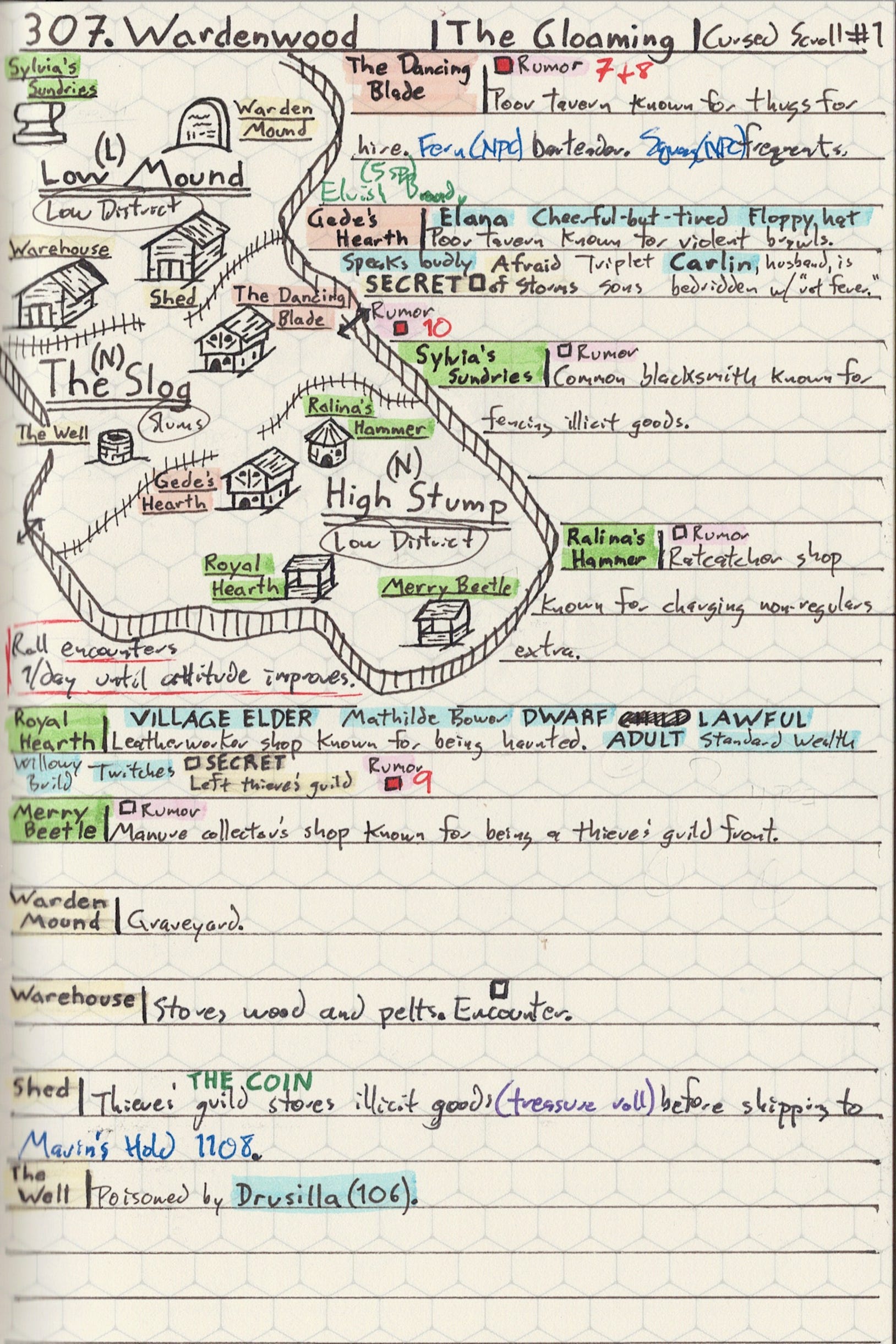
Nothing in the game indicated how or where I should hand out rumors. So I did it where it made sense. In previous games I waited for my rogue players to go into taverns or to walk through markets and tell me, player to arbiter, “I listen to what people are talking about, I listen for rumors.” These players haven’t done that, so I improvised in a way that made sense to me.
Ultimately, this approach allows me to prepare what I need and leave the rest. When I know that they are going into town, I prepare the town, the NPCs, and the rumors they will hear. When they are going to the medicine woman’s hut, I prepare the medicine woman and everything connected to her. When they are going to be exploring the wilderness I prepare the encounters and get familiar with the guidance on determining distance, attitude, and the potential animals that may wander across their path.
The Intentions of Design
I feel like I have been spinning circles around the same idea, and for that I am sorry. The piece that I want to make really clear here is that I feel intent in the design of this product. I feel that this little piece of a world is a rough layout, a series of ideas, laid out on a little map and ready for the arbiter to make their own. The designer has planted seeds that can spring into something more, all over, and is intentionally waiting for the players, more so than the arbiter, to water these seeds and grow them into something that not everyone will experience the same way.
Only in the last few years have I had any experience with premade adventures. When I was trying to run a 5e RAW game, I opened an adventure book for the first time with the plan to run it. During all those years before, my original group looked down on premades. We always ran our games off-the-cuff, which made us better. As I grew older I realized that we were wrong, and that premades are great for players with less time or who don’t have the trained skills at improv we were given by those who taught us how to play. Even then, not all of our games were great, some were awful.
The difference, the thing that is really blowing my mind, is that the premades I ran before were stifling. There was so much text and guidance, page references and instructions, that I felt that no matter what, I was doing it wrong. With these zines I feel, so far, that I am being given hints and told to flesh them out, if I even need to. The players may never go to the other side of the map, so I may never need to touch those areas and do any further prep.
I feel that this design empowers the improv skills I have had for many years, and maybe it will even nurture those skills in newer and less experienced players. I think that is the future of this hobby, or at least it should be. Mothership reminded me that I need to be able to create and improvise on the spot, that the world that I represent is not static and unchanging, and that the mere presence of other people makes the variability even more volatile.
Lessons Learned
Right now I am digging heavily into the fourth version of my alchemy system, which will have a bend for 5e and a bend for Shadowdark. I intend on making my own zine, with a few classes and ancestries and a light version of the alchemy system for crafting during downtime. It will also include a hexploration map and an adventure, and the light touch I have been experiencing of late is the perfect lesson to learn right now. I really want to produce a fun and interesting little region, and I think (hope?) that I am actually starting to understand the route I should travel to make that happen. Include the necessary information, as concise as possible, and leave the details for the people playing it. Inspire the arbiter, don’t direct the players.