
Heartbreaker Part 1
Layered Armour

I am mostly going to be speaking about good ol’ D&D here, but I assure you that I do know there are other games and that they all handle protective clothing in different ways. Now, the reason I am speaking about D&D is in the title; Heartbreaker.
As far as I know, the term heartbreaker, in the context of our hobby, has been a reference to games being designed by enthusiasts that are built on the chassis of the big popular thing that they love. I don’t think this is a bad thing, especially since I am one of those enthusiasts who just cannot get away from the brain-worm that constantly whispers in the back of my noodle “just a few tweaks here, and a little adjustment there, and we could have our own version that we like much better!”
Ever since I started playing I have been delving deep into the rules, the lore, and every facet of this hobby that I can get my hands on. At 19 I had stacks and stacks of paper with math and verbiage and fiction sprawled from edge to edge in the desperate attempt to understand how people took simulated reality and mapped it into understandable rules sets. I was hooked, and no matter what I have tried I cannot get away from it.
What is that “it?” It’s a Heartbreaker, and someday I am going to release it into public. Someday. Given that I have been at it for 20 years, you would think there would be something to show. But, as any creative knows, there is a constant back-and-forth with certain projects. As I have seen the rise and fall, and rise again, and recently, a fall again, of this game we all know and love (just admit it, we’re all friends here), I sway. Then I see that major professional designers took the chassis and put their own cars on it, and well, what could I possibly contribute?
I can contribute this.
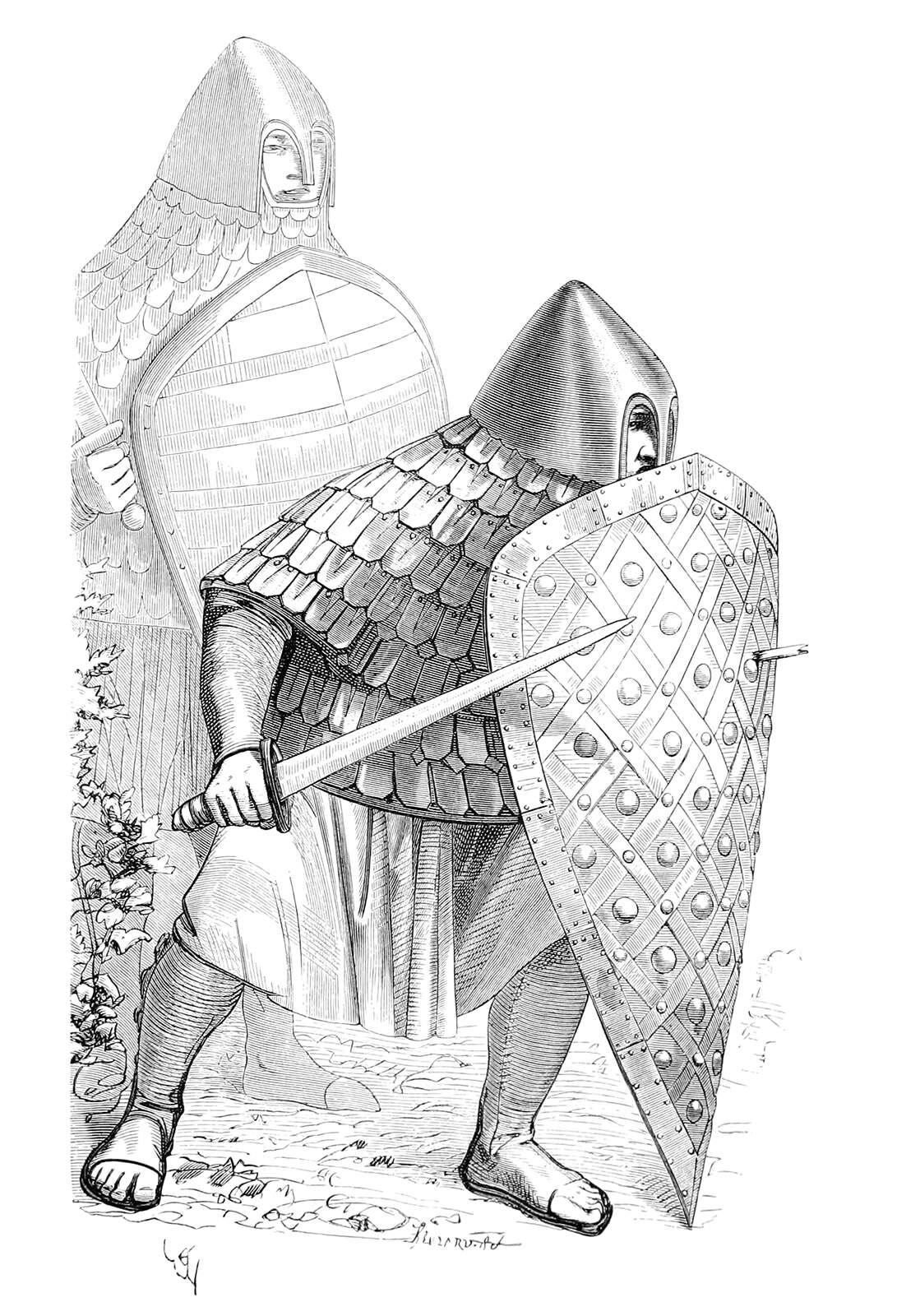
Historicity
Yeah, I just went to the search bar to define that word, to make sure what I thought it meant it actually meant. And yeah, I was right!
One of those hard lessons we all have to learn as designers is that historicity, or realism, DOES NOT equal fun. I learned that years ago, and it was a gut-punch from a dwarven smith. I had built so many systems and rules and “fun” things that would make the game amazing (not to mention impossible to run) that I all the sudden had to throw out because: none of it was fun. You couldn’t navigate a single bit of it without getting a headache and wondering why you were doing any of it in the first place.
The other lesson I learned, a little later, but based on that first lesson, was that you could use authenticity to inform your design. When you use something that people already know, or are familiar with, the on-boarding is so much easier. There are so many elements of reality that we rely on to inform the unwritten parts of our games. Skill and profession systems are so commonly used because people understand them from our everyday lives. My dad was a carpenter and he learned it by training and practice. That is both a profession and a skill, and it takes time to learn it. Easy.
Mapping Reality
Attempting to break down reality into easily understood rules is best left to physicists and their complex equations. As an example, I tried to break down, into a set of rules, how fire worked mechanically, so that characters could just start fires with oil or spells and then this other section in the book would take over with how it works. Bad idea.
So as I have been learning more and more about medieval history, society, laws and customs, technology, economics, and everyday life, the aspects of armour have always stuck with me. When I play this game I love I just don a leather suit, which was never a kind of armour on its own, and I am harder to hit. But it’s not so much that I am harder to hit, it’s that the armour keeps me, the person beneath the armour, from being hit by the deadly ends and the fiery magic. It’s almost as if the armour is helping me by deflecting the attack or absorbing some of the minimal harm.
That explanation makes sense, I can see that. Then, when you look into how the rules could be changed to add some authenticity, don’t worry, just a light sprinkling, it feels like the whole system falls apart. For several editions this game has relied on AC being a static score that sets the target number for the attacker. You have actions, spells, and special abilities all built on this understanding of armour. Plus, many of the other big games across the industry use very similar mechanics. Your defenses are static so that there aren’t too many dice being rolled and turns don’t take a long time. I get it.
Rules that are Applicable
I think this is an important point to stop and linger on; blah-blah-blah so that there aren’t too many dice being rolled and turns don’t take a long time. I have heard some discussion about this element before, but I don’t think I have ever heard so much as I have recently. With the advent of other games becoming very popular, and now that Daggerheart is in the mix, I feel like the discussion of complexity of turns and streamlining is out in the zeitgeist more than ever before.
The tenor of this discussion, as I have understood it, has always been a dichotomy. Either the players have too many things that they are doing individually, which makes all of their turns last too long and can make turn-based situations and scenes last way too long, or they have almost nothing to do and everyone feels like their character is more representative of themselves having just left the office to slay a hydra. Either too much or too little.
Time and again we have seen new books come out that offer more options, more abilities, and more power to players, often allowing them to rack up a pile of capabilities that make them feel like superheroes, or demigods, thus slowing the whole process to a sickly crawl. In order to compensate the GM has to bring out more and more guns, making their turns last longer, and everyone loses together because they were fantasizing about all the power they have when they were not in the moment when all those powers took 5 minutes per character to flop out onto the table.
The response is usually the same: nerfing. A new system comes out with the characters nerfed, which makes certain gamers happy and can make the game feel different or old school or gritty again. Then as this edition continues things slowly roll back, characters can be 8 different multiclasses because theory-crafters have content to make, new options are more powerful than old ones, and we are right back where we started.
I feel like this conversation has finally turned an important corner. And maybe it has always been there and I just missed it, that is a real (and highly likely) possibility. Now I hear people talking about what players can do on their turn, how it affects the overall group experience, and what GMs can do in response and how that affects the flow. This is all being wound up in a single conversation to figure out how best to proceed with moderate levels of complexity that can be front-loaded to character creation in a way that flows during turn-based scenes. Amazing!
To wrap up, as I have been looking over my ideas about redesigning D&D (and to be clear, not just 5e), since I learned this difficult lesson I am adding on the responsibility of making sure that any rules I bring aren’t going to make that moment-to-moment play any more difficult. And if I happen to do so anyways, it is something worth taking time or effort for.
How Armour Works
In my medieval fantasy, I have always wanted a more medieval take on armour. Every time I see a movie where the knight has his attendants scurrying around him, tying knots, slipping piece after piece on and strapping it in, and then finally the big chest plate is fit into place, I think it’s cool. That whole process, not so much, leave it with the existing rules: it takes 1 minute to don or doff light armor, etc.
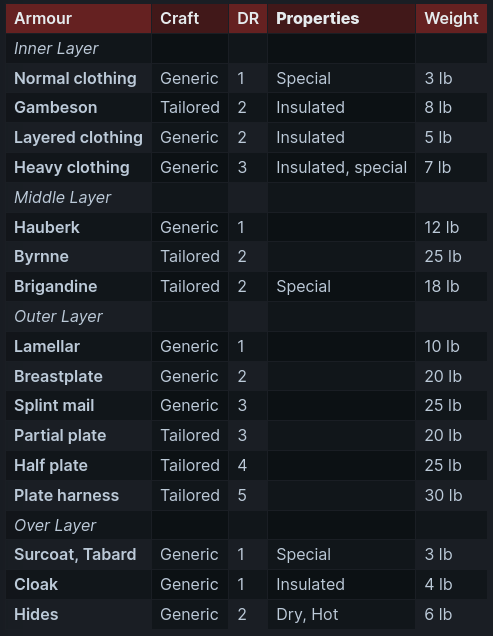
The idea I like so much is that the knight is wearing gambeson, then a layer of mail generally called a hauberk, and over the top they put on a breastplate, partial plate, of full plate harness. Obviously not everyone will be wearing full plate, but I’m sure some characters will want to go halfway and wear some gambeson and a hauberk (essentially a long chain shirt).
This is where we can really pull from some other games. In the Level Up Adventurers Guide for Advanced 5e, a helm offers benefits to saves against being stunned or rattled, and a visored helm reduces falling damage. We all know how important a helmet is when we fall, because as someone who bounced their head off concrete a lot as a kid (roller blades), I am pretty sure a helmet would have led to a much better disposition and cognitive capabilities as an adult!
Another aspect of armour that has always been itching the back of my brain is a classic argument: defense vs damage reduction. There are arguments on both sides that I think are valid, and going either way makes sense to me. I am on the side of damage reduction though, where the armour you wear reduces all incoming damage, but doesn’t make it harder to hit you. I get the point of making it harder for the danger-stick to hit the soft bits, but I think that just means that the armour itself is hit, and you don’t feel it (it doesn’t affect you) because it is reducing the damage.
The Spider’s Web
Any time you mess with a mechanic, at least for an existing chassis, you have to realize that there are little strands spreading out from that little point, that tiny intersection, that affect so many other things. The most obvious, if you change armour from defense to reduction, is how do you handle the target number for determining whether or not an attack was successful. The to-hit roll, how do you figure the AC?
In the 3e-3.5e d20 rules used for the Star Wars game, they had Defense. Armour still affected it, but because your swashbuckling Han Solo type obviously didn’t wear armour, it was mostly based on your class. Armour was for stromtroopers, and it didn’t protect them from anything, not even half open doors. Given that dexterity is the base attribute for determining AC, we can just move that over to Defense.
Rabbit Hole: Why is the starting value 8?
Something that really stood out to me as I began designing content for 5e was that a lot of the static scores began at 8, rather than 10. When you determine your score for anything, the most common being your spellcasting difficulty class, the calculation begins with “8 +…” and not “10 +…” Then, when you look at p14 of the PHB, second column, 5th paragraph, it says “Without armor or shield, your character’s AC equals 10 + his or her Dexterity modifier.” Everything else is 8+, but your AC is 10+.
The answer is just as good as any conspiracy theory! It’s because the default assumption is that everyone is proficient in their own Defense. When you are calculating your spellcasting DC, you add your proficiency bonus, which means it will go up as you advance in level, and the same goes for any other score calculation. But your ability to defend yourself does not increase, because they detached it from your increasing power. At 1st level, if you see this distinction (which I didn’t, it took years for me to put this together), then you would think you are getting a big boost. Everything else starts at 8 but your AC starts at 10, what a boon!
This is one of those mechanical decisions that seemed so arbitrary when I discovered it. I get it, they are professionals and they had good reasons to keep this system as they did. As a player it feels like they are separating this defensive stat from how the rest of the defensive stats work to keep your AC down and push you into other avenues of defense. Think about it, all of your saving throw proficiencies are also defensive stats, but those go up as you level. The only way your AC goes up is if you get better armour or increase your Dexterity score, or gain some other boon. The improvement lies outside of your character, while the rest (yes, if you are proficient) lie within your character.
An Underlying Avenue
This distinction hidden away in the early pages of the original printing gives us some room to work with in our new system. We simply make Defense work like several other elements, we attach it to proficiency so that everyone’s natural ability to defend themselves improves as they level up. So your Defense is equal to 8 + your proficiency bonus + your Dexterity modifier. Simple.
This leads to a few things (the ol’ spiderweb); characters will be hit more often, bonuses to AC will have more impact, and some characters will simply improve very little as they level. With the new system focusing on reduction, the increase in damage will likely be mitigated by being easier to hit. All those 1’s and 2’s on the damage dice by strengthless goblins and kobolds will be doing no damage now because the weakest armour reduces damage by 1 or 2. The barbarian and monk abilities that allow them to add other ability score modifiers to their AC will increase even more over time, but I think this will be minimal and offset by the fact that they don’t wear armour anyways, and they are frontline characters who are built to take hits, or avoid them. This leads to the last point that some characters simply won’t increase their AC that much, like wizards, but then again they never did, and that’s what shield spells are for.
Sidenote
Up until writing this article, and chasing this idea from the beginning and going over points and facts and ideas I have had sporadically over the years, I had not yet fully solved this system. I have had a set of layered armour ready for the equipment section, but I had not yet figured out how to fix the Defense issue. I guess it took this article in order for me to get there, and wow, it feels awesome.
Recap
AC now means damage reduction; whenever you take damage, reduce that damage by your AC. We could get into the nitty-gritty of damage types, and that argument is valid and can go on-and-on, but for now we will be keeping it simple. (I cannot wait to add a little more detail and distinction to this system though!)
Defense determines how difficult it is to hit you, and it is equal to 8 + your proficiency bonus + your Dexterity modifier. Any abilities you have that add to this remain the same.
And there it is. Enjoy.
P.S. Weight & Mobility
Listening to armour experts, and those who have worn plate armour and jousted or fought in a full set of plate, I have come to the conclusion that those who wear full plate are much less limited than the game system would have us believe. I also wouldn’t be surprised if the creators knew this, it isn’t a secret.
So why does heavier armour slow people down, give them penalties to things like stealth or movement or dexterity checks or what-have-you? In this instance, I would say game balance. When creating a character in a system that allows so many different kinds, there needs to be trade-offs. If you want to throw big spells that deal a lot of damage to a bunch of enemies at once, it isn’t fair that you can also wear the best armour and become a medieval fantasy tank, like literal abrams tank.
For those that want to stand toe-to-toe with a dragon and take as much damage as they deal, they don’t get the spells but they can wear the big suit of metal and swing a whole bunch of times with their sword. All of this is about trade-offs, making decisions to specialize in one area while sacrificing others. This makes complete sense.
I disagree. Something you will notice on my armour chart is that there is no property for bulky, loud, or some penalties to movement or stealth or anything of the kind. Yes armour weighs a lot, but the reason people could wear it is because the way it is attached to the person distributes that weight over the whole body. A suit of plate harness is not the equivalent of a backpack full of 50 pounds of gear. Therefore, if you want to use this system and would like to put those elements back, you go right ahead, but I will see how it goes without them.
Sneak Peak
So, when you look at our new Defense, what do you see? 8 + prof + Dex modifier, looks an awful lot like how you would calculate a static skill score, doesn’t it? And if it were a skill, which would allow you to determine who is and isn’t trained in defending themselves, because that is not a skill everyone has, even adventurers, what else could be done with it, and what other skills could we make that could further add fun and interesting bits?
Your dissertation of the D&D heartbreaker community is spot on. Also your armor rules are quite appealing. Your 8+ AC skill rule, should be so obvious, effectively integrating Armor Class as a core game mechanic, rather than an isolated absolute system of the game. I'm going to tinker with this idea thank you.